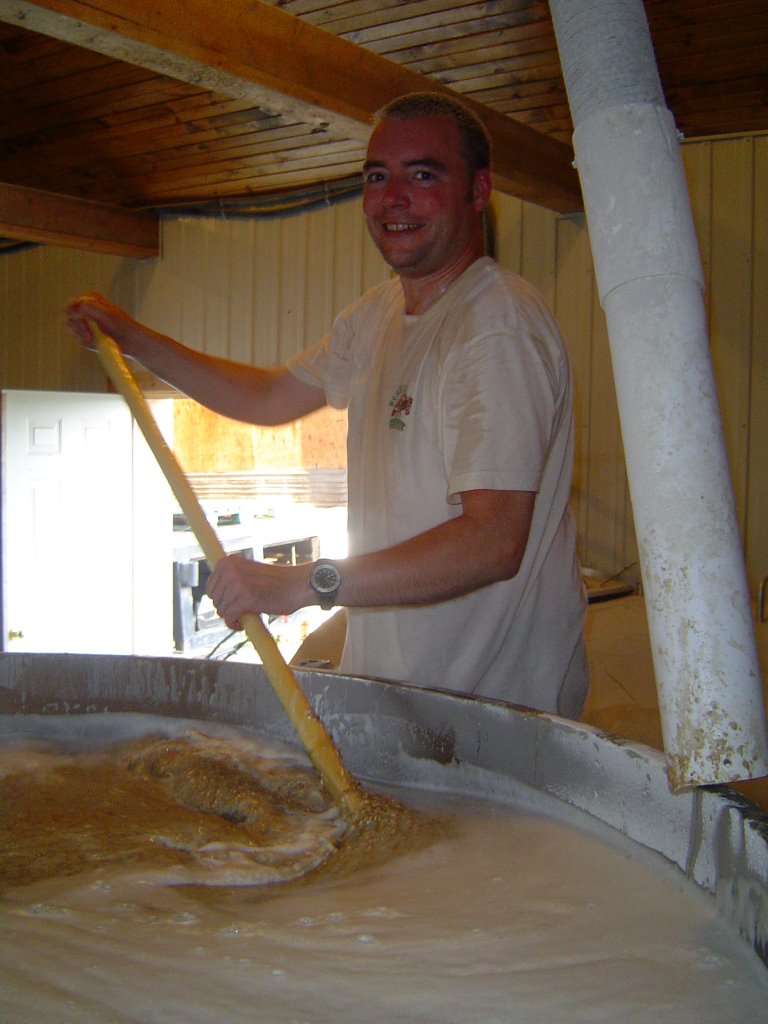
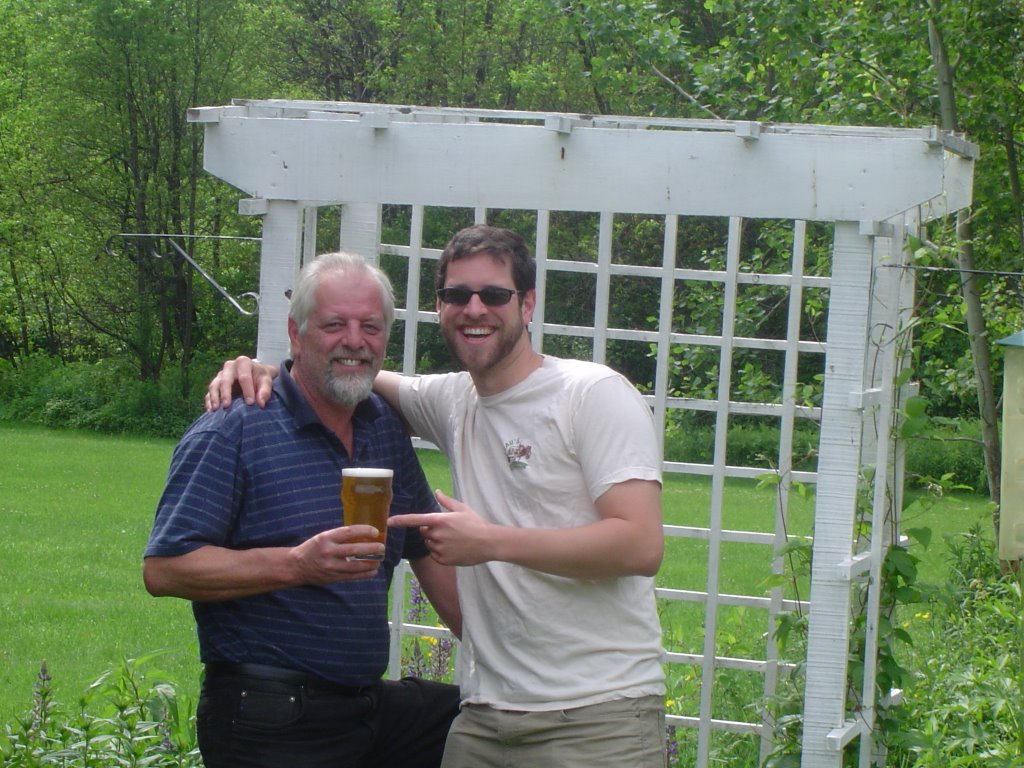
It was a crazy week leading up to the launch of Lug Tread on Canada Day. The yeast challenges we had experienced (see Yeast of Burden entry below) had put us into a race against time to get this beer kegged and into the bars, and Murphy's Law dogged us once again.
The plan was for (sales guy) Phil to go with (brewer) Matt to Campbellford where they would finish cleaning our kegs and slapping the Beau's logo on them. (Apparently the bar/restaurant industry is a lot like a daycare—if it doesn't have your kid's name on it, it ain't coming back to you.) Then they would filter the beer into the bright tanks and keg it.
We optimistically figured that Matt and Phil could even brew up the next two batches Wednesday and Thursday, and still be back in Ottawa for the Lug Tread launch parties at the new accounts. As long as everything went according to plan, things would be great.
First, a piece broke off the bright tank. This took a (Monday) to fix, and then the tank needed to be cleaned (goodbye, Tuesday).
On Wednesday the filtering began, and that's when things got really crazy. I got a call on my cell phone that all was going great... then a second call to tell me that after 400 litres the filter clogged (just a little major clogging, it's still good)... then a third to say that by 700 litres we’d run out of filtering agent and nothing more could be done.
It was too late not to have beer ready. The news release was out, the articles in the press, the sales were made. We didn't have time to sample or test the batch, tweak it or wait for the next one. What we had to deliver immediately worked out to exactly 650 litres, so we kegged those first 700 litres and hit the road, Ottawa-bound, since we had a press tasting event scheduled in two hours.
We poured our own first sip just as members of the media started arriving, but what hit the palate was not at all like our home-brewed pilot batch. Our Lug Tread is a tribute to the very subtle Kölsch style from Cologne, Germany.
This batch, while very tasty, was anything but subtle. Assertive bitterness and mouth-filling maltiness were the dominant traits, with a notable alcohol flavour. In fact, it tasted more like a Bock or a Bière de Garde than a Kölsch.
While we stood there perplexed, back at the brewery Matt was discovering the secret of what we would later christen our Kölsch-Bock. Our double-jacketed unitank, with icy kosher propylene glycol coursing through its veins, apparently worked a little too well. A 150 litre "iceberg" had formed, effectively concentrating the remaining wort and giving the yeast little opportunity to settle.
So there you are, Kölsch-Bock in hand, CTV cameraman filming for a news piece to air at 11:30 that night and a couple dozen interested spectators looking for the reaction to your first sip of the beer you spent your lifesavings and two years preparing to get on the market. And despite being a great beer, it is SO not the Lug Tread Kölsch. What would you do?
To get a little philosophical, there is a reason why craft brewing is called that. It's an art. And like an original piece of artwork, every batch of craft beer is going to be a little bit different (okay, a lot different in this case). If we wanted beer that tasted blandly the same every time we tasted it, we would be happy to drink Molson or Labatt products. But the craft beer drinker craves adventure, and boldly goes where his or her friends don't dare.
There is an Ontario craft beer that I absolutely love. Some beer enthusiasts are critical of this particular beer because it is listed as a "[style censored to protect the brewer]," yet it does not strictly adhere to that style. I personally don’t care too much whether it conforms to style. I like it because the flavour is unique and quite enjoyable.
The thought of that unique beer was what ultimately guided our decision to launch this first batch of Lug Tread onto the market — because despite not being what we intended, it is still a unique and enjoyable beer.
Some people expecting a Kölsch might be disappointed that this does not adhere to the style, while others will enjoy this batch and will be disappointed when future batches do not repeat this taste. Like entrepreneurs have to do every day, we made a judgment call and took a risk. Now, I guess time will tell whether this was the right decision to make.
I do understand that if you walk like a duck and call yourself an ostrich, you will not meet expectations. But I think there is room for reasonable variance in brewing craft beer. I have great faith that the Beau's beer drinker will find this beer tasty and interesting, and will have fun experiencing how the beer evolves. Personally I not only accept this aspect of brewing, I enjoy it — it's kind of like watching a kid grow up.
Oh, and a warning: I can guarantee our next batch won’t be perfect either. And there will still be some tweaking on the batch after that. When we move into our permanent brewery, it'll be almost like starting from scratch. But between here and there, we plan to brew up better and better beers for you all to enjoy along the way.
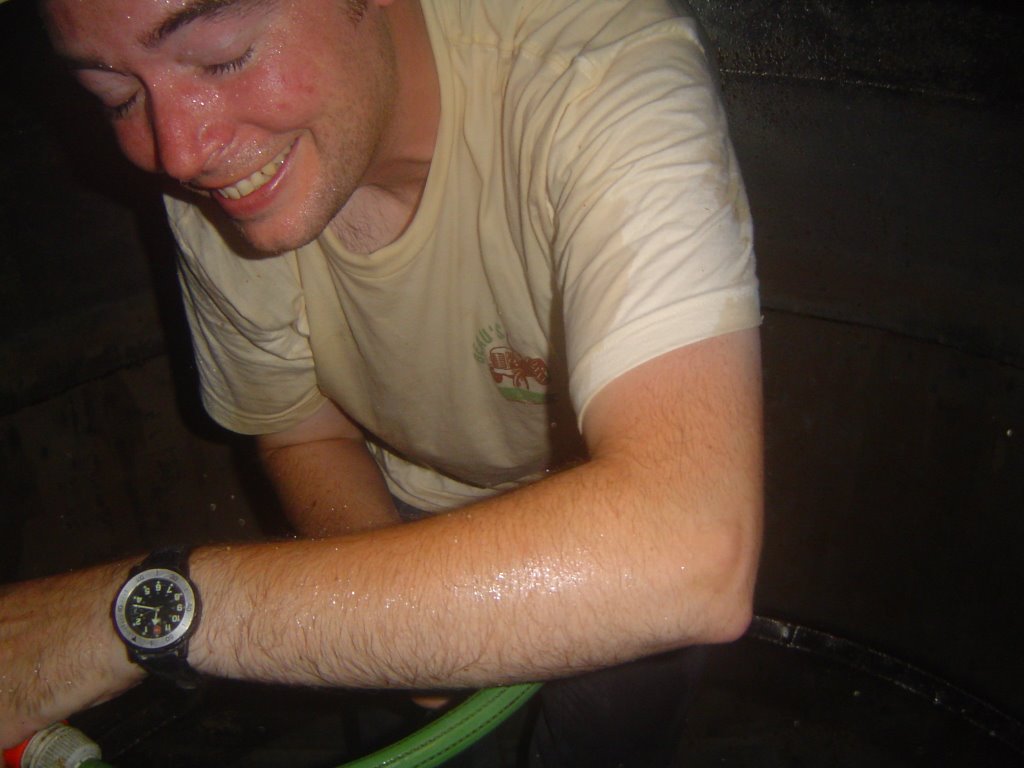

 "Brewing is @$%&! hard. Started brewing yesterday at 6am and finished at 1am the next morning. I'm back in h-town now."